


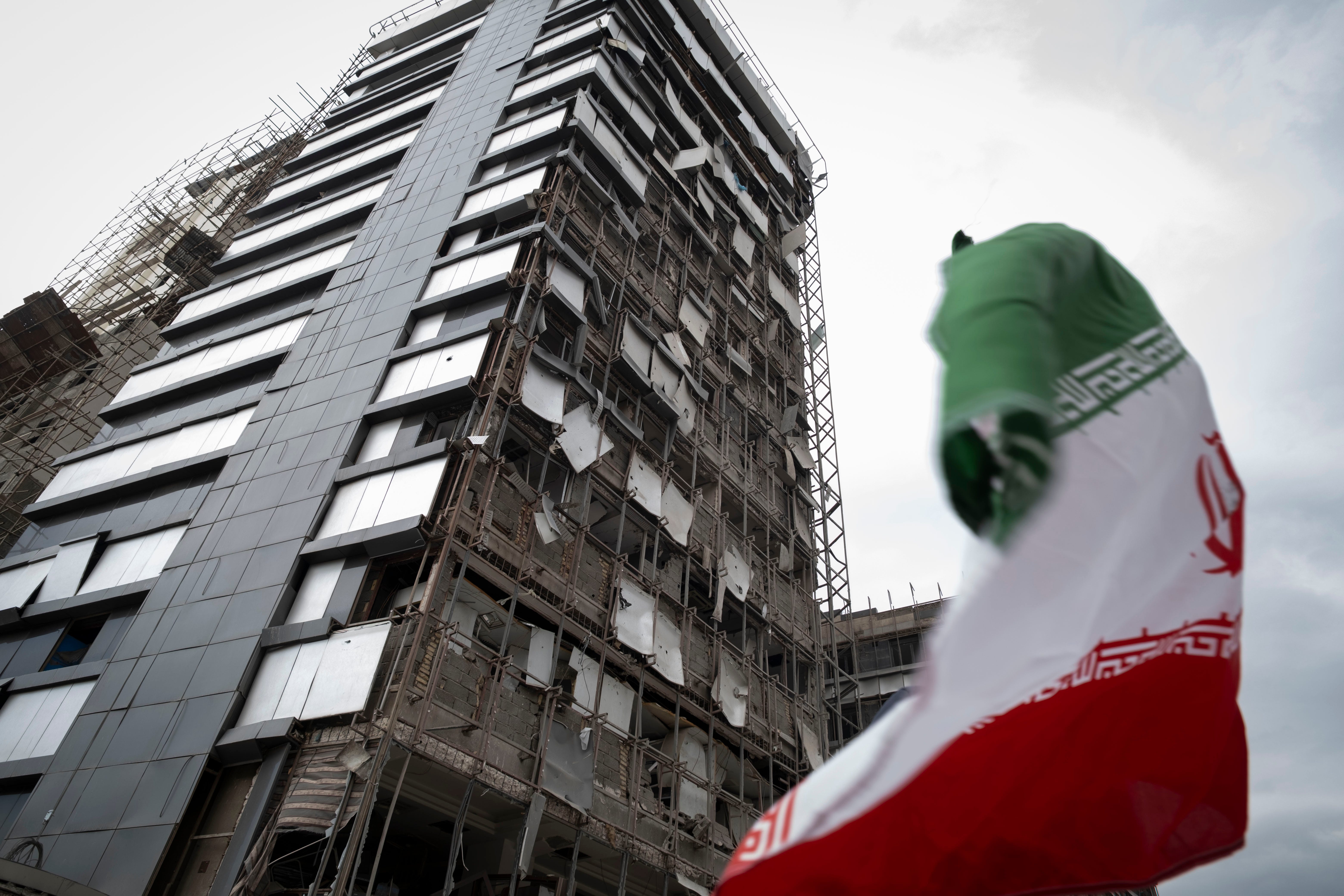
Changed World is an op-ed series from The Change Made that discusses current events to explain how we got here, why it matters and what the human dimensions are. Through personal essays and analyses, we cover local and global stories grounded in everyday life to help you better understand our changing world.
It’s time I talk about our changed world.
This weekend, the United States and Israel started a war with Iran by killing its supreme leader, Ayatollah Ali Khamenei. It’s become a tipping point that plunged the Middle East into another unnecessary conflict and has caused a major ripple effect worldwide.
Geopolitics, conflict and war are topics I haven’t openly written about beyond academia, but it's something that has defined my own upbringing as an immigrant kid who experienced what it was like to grow up in the Gulf War of 1990.
My parents are Indian, but I was born in Bahrain, a country which recently made headlines in our current news cycle as the U.S. Fifth Fleet headquarters was bombed by Iran in retaliation.
I was five during the 1990 Gulf War, and at the time, my younger sister was just a month old. At that age, you don’t fully understand the gravity of the situation or have the ability to reflect on what it meant for parents to raise their kids under those conditions of uncertainty and fear.
It’s only recently that I’ve started to unpack what those childhood memories might have meant; to see gas masks in a large discount bin at a supermarket, or to hear sirens go off on outdoor speakers as a warning for a missile strike, or to practice group drills in your primary school so you understand how to shelter in place from a possible attack.
Those memories of what I experienced in my childhood are nothing compared to the horrific trauma children in war zones of the global south are being forced to face and endure today, from Palestine to Afghanistan.
The endless loss of innocent lives is a cost on our human potential & ability to create a better world.
You just have to turn on the news to feel like people are living through one of the most polarized times of our lives.
With divisions between people feeling more present than ever, we can now be fed an endless, algorhythmic loop of humanity’s destruction in 4K, every time we pick up our phones.
During times like this, it’s hard to think about creating change when current events feel completely out of our control. It can push us to disconnect and focus on survival as the only way forward.
It’s even harder to understand how, as people, we can hang on to any hope when war and conflict around the world have become so normalized and made to feel like someone else’s problem.
But that hope and understanding for our shifting world become the most important tools for change.
How Did I Get Here?
My life changed when my parents immigrated to Canada to give my sister and me a better shot at life. They understood the compounded reality that, on top of the rising political tensions, South Asian expatriates in the Middle East could never be afforded the same equal rights and opportunities as citizens from there.
Explainer: to understand these dynamics of expatriates in the Middle East, you need to be aware of the Kafala System, explained here by the Council of Foreign Relations.
As my own personal survival instincts kicked in, I packed away those memories of growing up in the Gulf to adapt to a new world in Scarborough, Toronto, which was much different but would become one I could call home.
Those memories of navigating the complexities of being a third culture kid likely pushed me to study international relations during my undergrad, when I first started writing about geopolitical conflicts. It is also what pushed me to pursue a career in international development, where I focused on advocacy-based communications, humanitarian affairs and the alleviation of global poverty.
When I started building the documentary project Scarborough Made almost two decades later in my life and career, I knew some of that work had to take a back seat, so I could make sense of how break into the creative industries while blending my practice of creating and changemaking.
Over the last two years, I’ve brought my focus for development work back to the forefront by leading Change Made’s creative studios to develop advocacy-based media campaigns for nonprofits and charities.
Through our studios, we worked on various media projects that supported humanitarian fundraising campaigns for the people of Gaza, raised awareness about refugee healthcare in Scarborough, and helped engage with Indigenous youth in Canada.
This year I’ve started building the other side of that coin with Change Made Press by reporting on solutions stories aimed at bringing more hope, understanding and awareness so people can have more impact in the world.
But not all stories can or should be boiled down to a simple solution; there are times we need to create space to explain or discuss the gravity of a current event or challenge and how it impacts people on the ground.
Why Does This Matter?
The point is that change is always evolving and shifting. Change is not always net positive; it doesn’t occur in a controlled environment or in a method that we expect.
That’s why it’s even more important today that we talk about how change, whether good or bad, is shaping the world we live in.
I’m introducing “Changed World” as an op-ed column where I can shed light on topics about current events that matter both locally and globally.
It looks to bring opinion editorial work that offers personal insights and analysis on the current events impacting us, so we can understand one another in a world that has felt more divided.
It’s a place for me to raise important questions during times of war that bring awareness to humanitarian principles and the international law that are being ignored, as we’ve actively seen the targeting of women, children, hospitals and journalists in Gaza and are now again starting to witness in Iran.
Through this column, I’m hoping to spark more conversations with changemakers and experts, offering both snapshots and deeper dives that can help us navigate and explain our changing world together.
I packed away many of my own memories of growing up during the Gulf War because I just shifted to the next challenge, which, for me at that time as a teenager, meant adapting to a new country as a first-generation immigrant.
As immigrants, we don’t often have spaces where we can speak openly about the challenges that define us collectively, and it’s not until we do that we begin to realize our potential to create change and build resilience in adversity.
There is a quote I’ve always gone to in challenging times:
To live is to suffer, to survive is to find some meaning in the suffering
Philosopher Friedrich Nietzsche said it, but the rapper DMX made it more accessible to everyday people to understand.
Right now in our world, we’re seeing more and more suffering by people who didn’t ask for another war and only wanted a life of freedom, where they can dream of a future and exist without fear of losing their families or loved ones.
An opinion article won’t shift an already changing world, but it will help you make sense of it, so we can be prepared to help those who are trying to survive as a result of it.
If you have a solutions story tip or are interested in contributing as an opinion columnist, as always, you can reach me at sid@changemade.co.
Authors’ Note: Writing about geopolitics and war is challenging. It’s not something that should ever boil down the complexity of conflict into a bite-sized summary or listicle, and requires both a human perspective and empathy to articulate.
Before writing an opinion piece or long form analaysis, I spend a week researching and understanding the topic across different outlets so I can be as factual and knowledgeable as possible in my discourse. I write about these topics, drawing on my background in international relations and development, to offer another lens through which we can view our world.
If you want to see more independent journalism through The Change Made, consider becoming a paid subscriber, as all work on this platform is self-funded. I post dispatches twice a week and sometimes more when a story like this deserves it.